
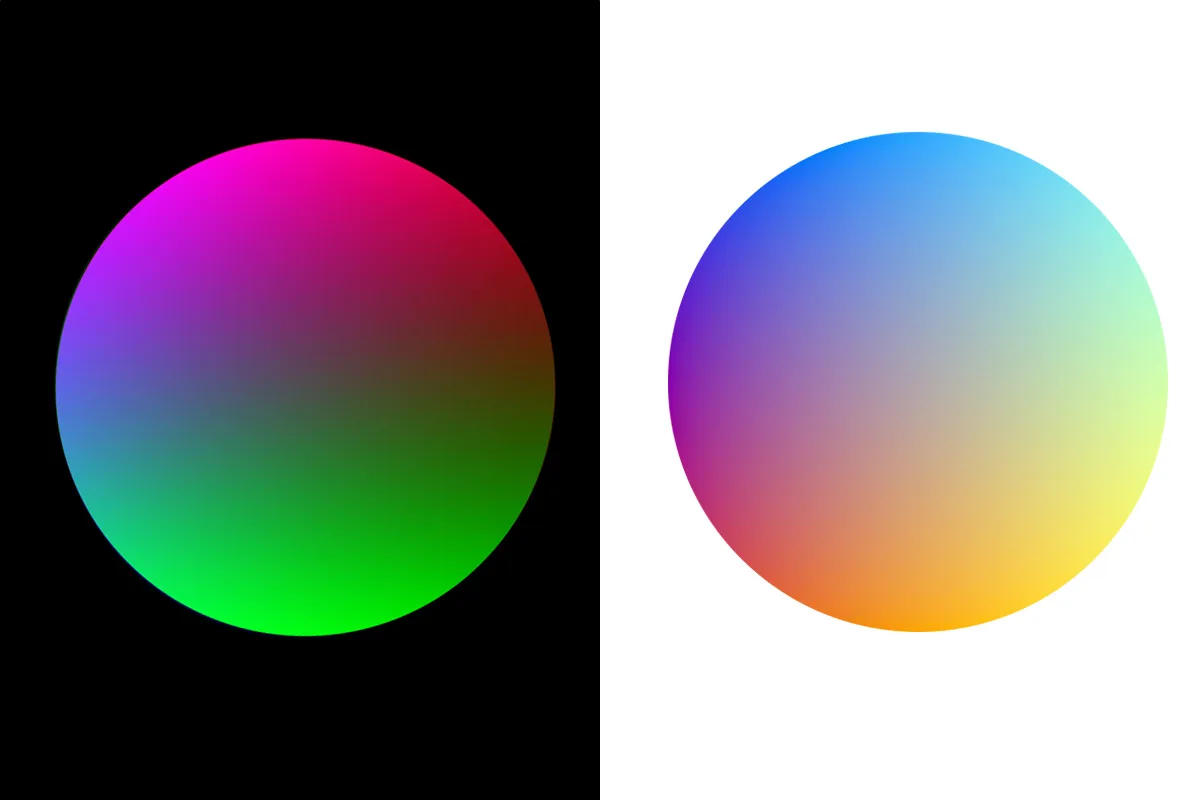
There are many reasons why the red, yellow, and blue primary colours story has persisted and is still taught to many people. Sonya Rowan explores some of the reasons in her book about colour. The truth is that humans have three types of cone cells. These cells allow us to experience many colours because when they are activated, our brain calculates how many cells of each type are activated and translates that information as colour perception. Colour lives in our minds.
Your computer screen uses red, green, and blue lights to create all the colours you see on the screen because that makes the most sense for how our eyes work. The cone cells are often referred to as long/red, medium/green, and short/blue. Yellow is not connected to a type of cone cell. There has been confusion in the past about the colours red/magenta and blue/cyan. Magenta and cyan are secondary colours when RGB is mixing and getting lighter as the colours mix, or moving towards white.
We also have lots of posters to illustrate colour mixing.
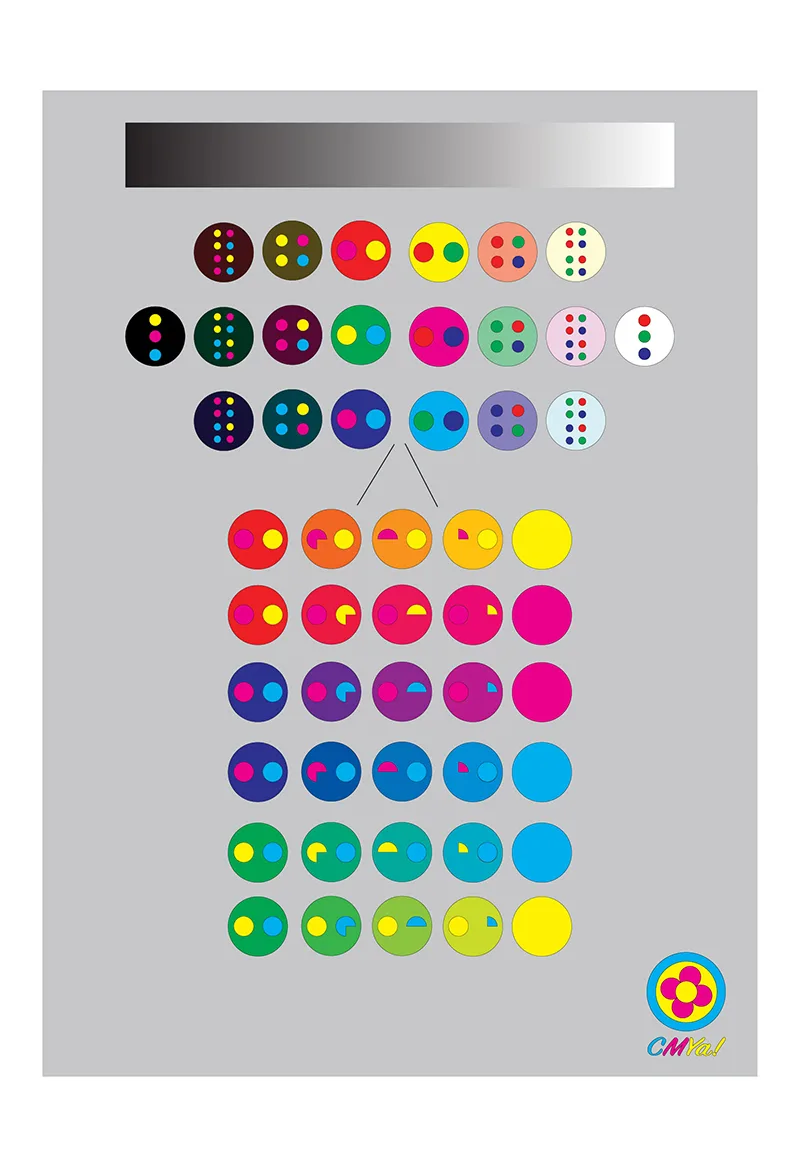
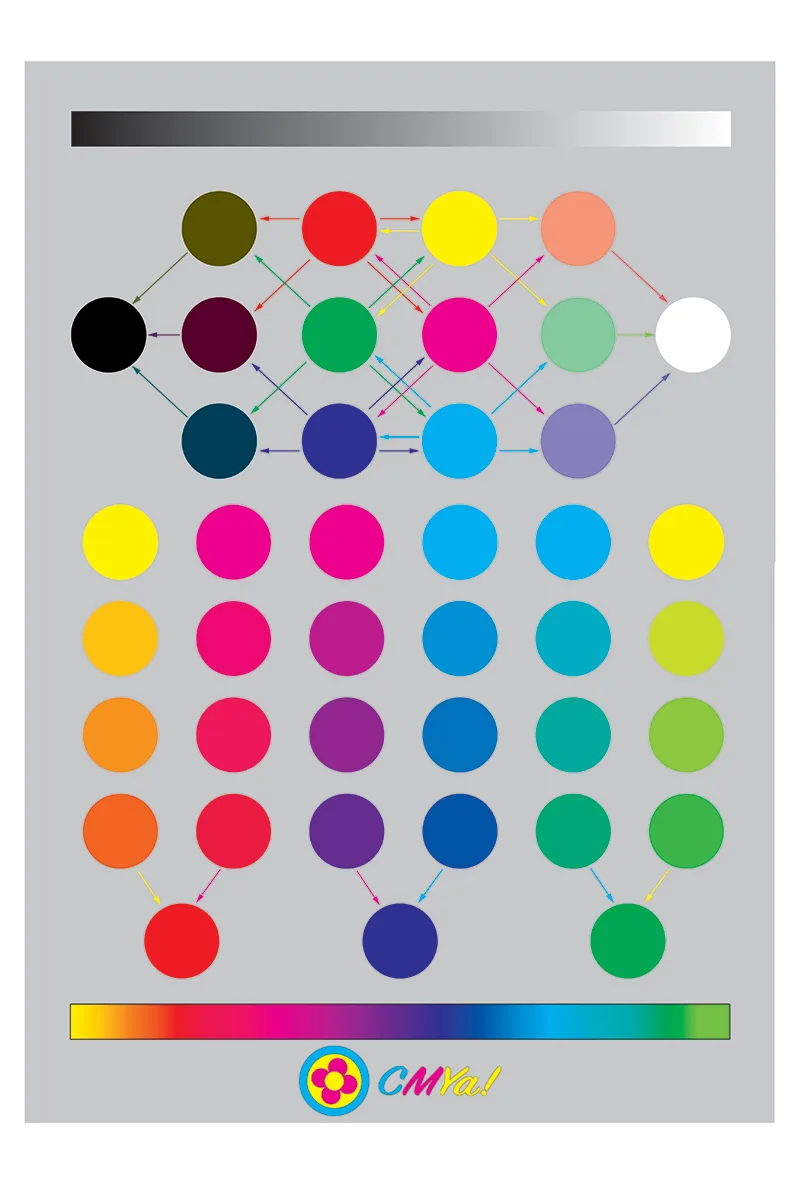
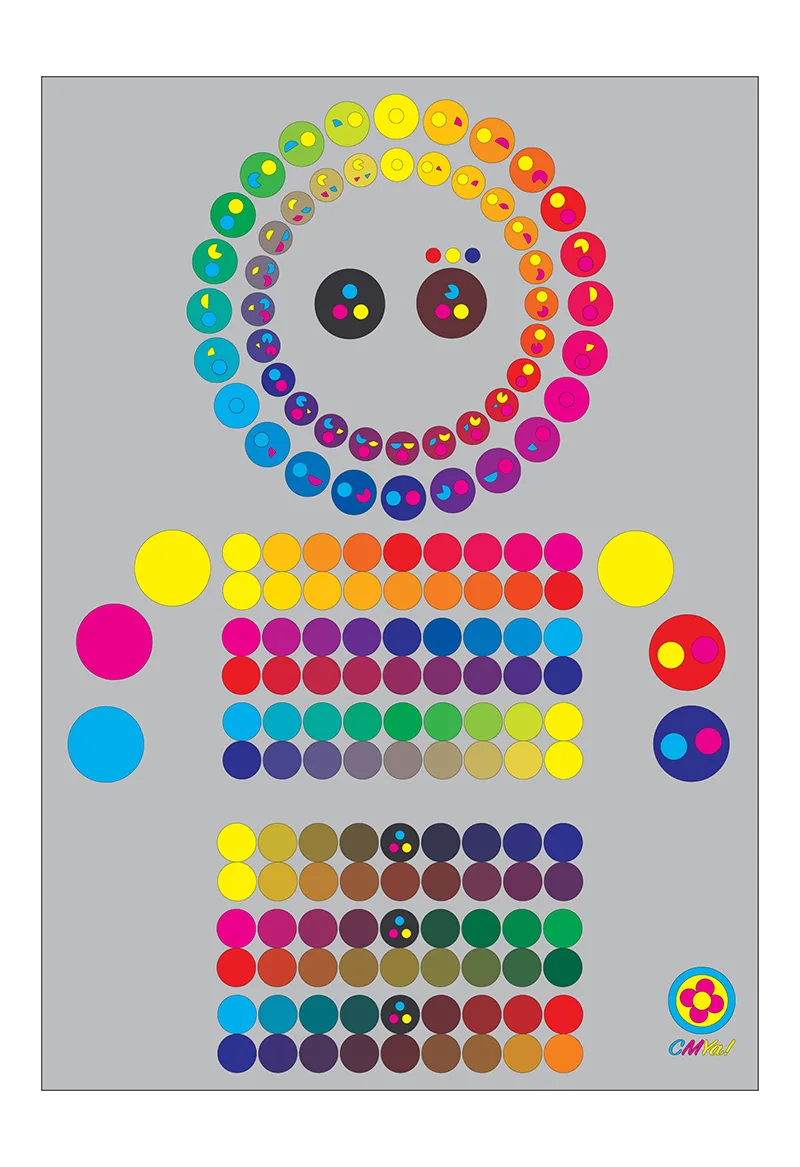
It’s time to get the story straight and share logical information with students. Red, yellow, and blue have never been a set of primary colours. This is why when there are toys, images, and video created to communicate this story, they need to fake the colour mixing. A bright purple and green are often shown but those colours can only be mixed when one of the true primary colour sets is being used. Red, green, and blue if you are mixing colours that are moving towards white, like with coloured lights. Cyan, magenta, and yellow if you are mixing colours that are moving towards black, like with ink and paint.